Duration of Treatment
usually takes 5 to 7 hours
Days of Stay
usually 5 to 7 days in the hospital and 15 days outside the hospital.
Anesthesia
General anesthesia.
Cost
13000 to 17000 USD
Slipped Disc Surgery Cost in India:
A slipped disc, sometimes known as a prolapsed disc or herniated disc, is a common spinal condition that can result in severe pain, numbness, and problems with movement. While many cases are treated conservatively, surgical intervention becomes necessary when symptoms persist or worsen. India has emerged as a trusted destination for slipped disc surgery, offering world-class care at a fraction of global costs.
This guide outlines the slipped disc surgery cost in India, available treatment types, top hospitals, and leading spine surgeons.
What is a Slipped Disc?
A slipped disc occurs when the inner gel-like core of a spinal disc pushes out through a tear in the outer layer, compressing nearby nerves. This can occur in the lumbar (lower back) or cervical (neck) region.
Common Symptoms:
- Back or neck pain
- Sciatica (radiating leg pain)
- Tingling or numbness in limbs
- Muscle weakness
- Limited mobility
When is Surgery Needed for a Slipped Disc?
Surgery is typically considered when:
- Conservative treatment for 6–8 weeks does not result in an improvement in symptoms.
- There is severe nerve compression or weakness
- Loss of bowel/bladder control (cauda equina syndrome)
- Pain is disabling and affects quality of life
Types of Slipped Disc Surgery in India
- Microdiscectomy – Removal of the herniated disc fragment through a small incision
- Endoscopic Discectomy – Minimally invasive, keyhole surgery using an endoscope
- Laminectomy – Removal of part of the vertebral bone to relieve nerve pressure
- Artificial Disc Replacement: An implant is used to replace a damaged disc.
- Spinal Fusion – Stabilizing the spine by fusing two or more vertebrae
Slipped Disc Surgery Cost in India
In India, slipped disc surgery typically costs between USD 3,000 and USD 6,000, depending on the procedure, hospital, and city.
Cost Breakdown by Procedure (USD)
|
Procedure Type
|
Approximate Cost (USD)
|
|
Endoscopic Discectomy
|
$3,000 – $4,500
|
|
Microdiscectomy
|
$3,500 – $5,000
|
|
Laminectomy
|
$4,000 – $6,000
|
|
Disc Replacement Surgery
|
$6,000 – $8,000
|
|
Spinal Fusion
|
$5,500 – $9,000
|
Package prices usually include hospital stay, surgeon’s fee, OT charges, anesthesia, and basic diagnostics.
Top Hospitals in India for Slipped Disc Surgery
- Medanta – The Medicity, Gurgaon
- Max Super Speciality Hospital, Delhi
- Apollo Hospitals (Chennai, Hyderabad, Delhi)
- BLK-Max Hospital, Delhi
- Fortis Memorial Research Institute, Gurgaon
- Artemis Hospital, Gurgaon
- Indian Spinal Injuries Centre, Delhi
- MGM Healthcare, Chennai
These hospitals are equipped with advanced spine surgery infrastructure, including robotic systems, neuro-navigation, and intraoperative monitoring.
Best Spine Surgeons in India for Slipped Disc Surgery
India is home to several globally trained spine experts with decades of experience in minimally invasive and advanced spinal procedures:
- Dr. Bipin Walia – Max Hospital, Delhi
- Dr. Puneet Girdhar – BLK-Max Hospital, Delhi
- Dr. Hitesh Garg – Artemis Hospital, Gurgaon
- Dr. Sajan Hegde – Apollo Hospital, Chennai
- Dr. Arun Saroha – Max Hospital, Gurgaon
- Dr. Saurabh Verma – Artemis Hospital, Gurgaon
- Dr. Aditya Gupta – Artemis, Gurgaon
- Dr. Rana Patir – Fortis Hospital, Gurgaon
- Dr. Anil Kumar Kansal – BLK-Max, Delhi
- Dr. Shibu Vasudevan Pillai – VPS Lakeshore, Kochi
Why Choose India for Slipped Disc Surgery?
- 70–80% lower costs than US/UK
- No waiting time for surgery
- Board-certified, internationally trained surgeons
- State-of-the-art hospitals with JCI/NABH accreditation
- Multilingual support and medical tourism services
Medical Tourism Support in India
For international patients, Indian hospitals offer:
- Free pre-arrival consultation and case review
- Medical visa invitation
- Airport pickup and interpreter services
- Affordable accommodation options
- Post-op rehabilitation and virtual follow-ups
Recovery and Success Rate
- Most patients walk within 24–48 hours post-surgery
- Return to light activity in 1–2 weeks
- Full recovery in 4–6 weeks (depends on procedure)
SEO Keywords to Target:
- Slipped disc surgery cost in India
- Herniated disc treatment India
- Disc replacement surgery India
- Microdiscectomy in India
- Affordable spine surgery India
- Best hospital for slipped disc surgery India
- Top spine surgeons India
Meta Title: Slipped Disc Surgery Cost in India – Affordable Spine Surgery Packages
Meta Description: Discover the cost of slipped disc surgery in India, treatment options, top hospitals, and expert spine surgeons. Get quality spinal care at affordable prices.
Symptoms
What are the Symptoms and Signs That May Indicate a Need for Spine Scoliosis Surgery?
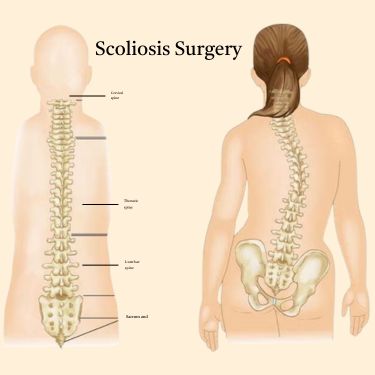
Scoliosis is a condition where the spine curves sideways, and in some cases, surgery is recommended to correct severe curvature or related complications. Below are common signs and underlying factors that might lead to scoliosis and its treatment:
- Visible Shoulder Imbalance – One shoulder may appear higher than the other.
- Uneven Waistline – The waist may look slanted or asymmetrical.
- Abnormal Spine Curvature – Noticeable spinal tilt when viewed from behind.
- Muscle Weakness – Reduced muscle strength, especially in the back or limbs.
- Delayed Reflexes or Nerve Issues – Slower nerve response or sensation loss in some cases.
- Underlying Conditions: Scoliosis may be exacerbated by conditions like muscular dystrophy or cerebral palsy.
- Genetic Factors – A family history of scoliosis may increase the risk.
- Unknown Cause (Idiopathic Scoliosis) – The most common type, especially in teenagers, often has no clear reason.
- Presence of Tumors or Spinal Abnormalities – In rare cases, growths or spine deformities can lead to scoliosis.
Preparation
How Should You Get Ready for Scoliosis Surgery?
Getting ready for scoliosis surgery involves a few important steps to ensure a safe procedure and smooth recovery. Here’s what patients and families need to know:
- Choose the Right Hospital and Surgeon
Look for a trusted spine hospital with experienced doctors who specialize in scoliosis correction. Make sure the facility offers modern equipment and patient care support at a reasonable cost.
- Understand the Surgery Cost
In India, scoliosis surgery costs usually range between $13,000 to $17,000 USD. Prices may vary based on the surgeon’s expertise, type of implants used, hospital location, and overall care quality.
- Health Check Before Surgery
The patient must undergo a pre-surgical evaluation. This includes:
- Blood tests
- ECG and echocardiogram (heart check-up)
- Urine analysis
These tests help confirm that the patient is fit for the operation.
- Provide Medical History
Inform the doctor about any medications being taken. This helps avoid complications during surgery.
- Consent Form
You will be asked to sign a consent form prior to the procedure. This confirms that you understand the procedure and allow the surgical team to proceed.
- Hospital Admission
Usually, patients are admitted a day before surgery. Doctors may ask the patient to fast (avoid food and drink) for several hours before the procedure.
- Stop Blood-Thinning Medicines
If the patient takes blood thinners, these may need to be stopped 10 days before surgery, as advised by the doctor, to reduce the risk of bleeding.
Procedure
How is Scoliosis Surgery Done?
Before surgery, doctors will do several tests to understand your spine condition. These tests may include:
- Blood tests
- X-rays
- CT scans
- MRI scans
You will also meet with your surgeon and anesthesia team to go over the steps, safety measures, and what to expect after the surgery.
Surgical Approaches for Scoliosis
Doctors may choose one of the following methods based on your condition:
- Back Side Surgery (Posterior Approach) – The operation is done from the back of the body.
- Front Side Surgery (Anterior Approach) – The operation is done from the front or side of the chest or abdomen.
Step-by-Step Surgery Process
Step 1 – Giving Anesthesia
You will be put to sleep using general anesthesia so you don’t feel anything during the surgery. The operation usually takes about 5 to 7 hours, depending on how complex your spine curve is.
Step 2 – Making the Cut and Correcting the Spine
- Depending on the plan, either your chest, back, or both may be cut (incision).
- Muscles are gently moved to reach the spine.
- Some joints between the spine bones are removed to help straighten the spine.
- A bone piece (called a bone graft) is placed between the spine bones to help them grow together.
- During the healing process, metal instruments such as hooks, screws, or rods are used to hold the spine in place and stable.
Step 3 – Closing the Cut
Once the spine is fixed, the skin is closed with stitches, glue, or clips, and covered properly to start healing.
Post Procedure
What is the Postoperative Care After Scoliosis Surgery?
After scoliosis surgery, proper care and follow-up are important for smooth healing and long-term recovery. Below are the key points for post-surgery care:
- Follow Medical Advice Carefully
Your doctor will guide you on how to take care of your wound, manage medicines, and follow recovery steps at home.
- Wound Healing and Stitch Removal
Stitches or skin clips are usually taken out about 7 to 10 days after the surgery, depending on how well the area is healing.
- Movement After Surgery
Most patients are allowed to sit or move carefully within 24 hours of the operation. Walking with support (like a walker) may begin within 2 to 3 days.
- Back Support and Physiotherapy
A lumbar support belt may be recommended for a few weeks to help stabilize your spine. A physical therapy program may start shortly after to rebuild strength and flexibility.
- Activity Restrictions
Heavy physical activities like cycling, running, or contact sports should be avoided for at least 6 to 8 months, or until your doctor gives you clearance.
Success Rate
How Successful is Scoliosis Surgery?
The outcome of scoliosis surgery often depends on several factors, including the surgeon’s skill, the shape and size of the spinal curve, and the patient’s overall health.
- In most cases, the curve of the spine can be improved by 65% to 70% through surgery.
- Complications are rare, with serious risks happening in less than 2% of patients.
- The primary goals of the surgery are to help the spine remain stable and balanced and to prevent the curve from getting worse.
With skilled doctors and modern treatment methods, scoliosis surgery is considered safe and effective, especially when proper care is taken before and after the procedure. Many patients feel better, stand straighter, and return to daily life more comfortably after recovery.
Risk Factors
What Are the Possible Risks of Spine Scoliosis Surgery?
Spine scoliosis surgery can help correct the curve of the spine, but like any major surgery, it comes with some possible risks. These risks depend on the patient’s age, health condition, and the severity of the spine curve.
Here are the common risks:
- Nerve Problems – There’s a small chance that nerves may be affected, which can lead to weakness or changes in feeling in the arms or legs.
- Infection – After the operation, some patients may develop an infection that may need medicine or further care.
- Breathing or Heart Issues – If the spine curve is very large, the surgery may affect the chest area, leading to problems with the heart or lungs.
- Blood Clots – Clots can form in the legs or travel to the lungs, which can be dangerous.
- Injury to Body Tissues – Muscles, nerves, or other nearby tissues may be harmed during surgery.
- Health Conditions That Increase Risk – Some medical conditions like:
- Cerebral palsy (a disorder that affects movement)
- Marfan syndrome (a condition that affects connective tissue)
can make surgery more difficult and raise the risk of problems.
- Bleeding – Blood loss during the surgery is possible and may require a transfusion.