Duration of Treatment
usually takes 3 to 4 hours
Days of Stay
usually 7 to 15 days in the hospital and one month outside the hospital.
Anesthesia
General anesthesia.
Cost
13000 to 18000 USD
IVF Treatment Cost in India
In Vitro Fertilization (IVF) in India is globally recognized for its high success rate, world-class technology, and affordable cost — making it a preferred destination for both domestic and international couples facing infertility.
Average IVF Treatment Cost in India
|
Type of IVF Treatment
|
Estimated Cost (INR)
|
Estimated Cost (USD)
|
|
Basic IVF Cycle
|
₹90,000 – ₹1,75,000
|
$1,100 – $2,100
|
|
IVF with ICSI
|
₹1,50,000 – ₹2,50,000
|
$1,800 – $3,000
|
|
IVF with Donor Egg
|
₹2,00,000 – ₹3,50,000
|
$2,400 – $4,200
|
|
IVF with Donor Sperm
|
₹1,50,000 – ₹2,50,000
|
$1,800 – $3,000
|
|
IVF with Frozen Embryo Transfer (FET)
|
₹1,20,000 – ₹2,00,000
|
$1,400 – $2,400
|
|
IVF with Blastocyst Culture
|
₹1,80,000 – ₹2,80,000
|
$2,200 – $3,400
|
|
IVF with PGD/PGS (Genetic Testing)
|
₹2,50,000 – ₹4,00,000
|
$3,000 – $4,800
|
🧪 Note: Prices vary based on location, hospital, age of the patient, medication used, and complexity of the case.
What’s Included in Basic IVF Package?
- Ovarian stimulation (injections & scans)
- Egg retrieval
- Fertilization & embryo culture
- Embryo transfer
- Daycare hospital charges
Not usually included:
- Freezing & storage
- Medication
- ICSI, donor programs, or additional lab procedures
Why is IVF Affordable in India?
- Lower hospital and lab infrastructure costs
- Skilled specialists with high-volume experience
- Government-regulated fertility clinics
- Competitive pricing with international standards
Top Cities for IVF in India
- Delhi NCR
- Mumbai
- Bangalore
- Chennai
- Hyderabad
- Pune
- Ahmedabad
Symptoms
Infertility often doesn’t present clear symptoms beyond the inability to conceive, but here are common signs in both women and men that may lead to considering IVF treatment:
In Women
- Irregular or Absent Menstrual Cycles
- May indicate ovulation issues (e.g., PCOS)
- Painful Periods or Pelvic Pain
- Could be due to endometriosis or fibroids
- Frequent Miscarriages
- May indicate hormonal imbalance or uterine abnormalities
- No Pregnancy After 12 Months of Trying
- (6 months if over age 35)
- Hormonal Imbalance Signs
- Weight gain, acne, excess facial hair
- Abnormal Vaginal Discharge
- Possible infection affecting fertility
In Men
- Low Libido or Erectile Dysfunction
- Affects ability to conceive
- Pain or Swelling in Testicles
- May signal varicocele or infection
- Changes in Hair Growth or Hormonal Symptoms
- Suggests testosterone issues
- Low Semen Volume or Abnormal Semen Analysis
- Often a primary reason for IVF with ICSI
Risk Factors
Infertility can be caused by one or more medical, lifestyle, or age-related factors — in either partner. Understanding these risk factors is key to early diagnosis and timely treatment, such as IVF.
In Women
- Age (especially >35 years)
- Decreased egg quality and ovarian reserve
- Polycystic Ovary Syndrome (PCOS)
- Hormonal imbalance causing irregular ovulation
- Endometriosis
- Tissue growth affecting ovaries and fallopian tubes
- Uterine Fibroids or Structural Abnormalities
- Can interfere with implantation or pregnancy
- Tubal Blockage or Pelvic Infections (PID)
- Often due to untreated STIs or past surgeries
- Thyroid Disorders
- Affects ovulation and hormonal cycles
- Premature Ovarian Failure (POF)
- Early menopause before age 40
- Excessive Stress or Underweight/Obesity
- Hormonal disruptions affecting ovulation
In Men
- Low Sperm Count or Poor Motility
- Common reason for IVF or ICSI
- Varicocele (enlarged veins in the scrotum)
- Hormonal Imbalances (e.g., low testosterone)
- Reduces fertility potential
- Past Infections (e.g., mumps, STIs)
- Can damage reproductive organs
- Exposure to Heat, Radiation, or Toxins
- Sperm production can be impaired
- Smoking, Alcohol, or Drug Use
- Linked to DNA damage in sperm
- Chronic Health Conditions (e.g., diabetes, cancer)
- Affect hormonal and sexual function
Shared Risk Factors (Both Partners)
- Advanced age (female >35, male >40)
- Unhealthy lifestyle (stress, poor diet, lack of exercise)
- Environmental toxins (pesticides, heavy metals)
- Genetic conditions or family history of infertility
- Previous pelvic or abdominal surgeries
Preparation for IVF
Preparing for IVF involves both medical readiness and lifestyle adjustments to improve the chances of success. Below is a comprehensive overview of how to prepare for IVF treatment:
- Initial Consultation & Evaluation
- ✔️ Medical history review (both partners)
- ✔️ Physical exam & pelvic ultrasound (female)
- ✔️ Semen analysis (male partner)
- ✔️ Blood tests – Hormones (FSH, AMH, LH, E2, TSH, Prolactin)
- ✔️ Infectious disease screening – HIV, Hepatitis B/C, etc.
- ✔️ Uterine evaluation – HSG (tubal test), saline ultrasound, or hysteroscopy
- Pre-Treatment Recommendations from Doctor
- 🧬 Control underlying conditions (thyroid, diabetes, PCOS)
- 💊 Start vitamins & supplements – especially folic acid, Vitamin D, and CoQ10
- 🛑 Avoid alcohol, smoking, caffeine, and recreational drugs
- 🍽️ Maintain a healthy weight (BMI ideally between 19–30)
- 💆♀️ Reduce stress and anxiety (yoga, meditation, counseling)
- Menstrual Cycle Monitoring
- Doctor may put you on birth control pills for 2–3 weeks to regulate the cycle
- Baseline ultrasound and hormone bloodwork done before starting stimulation
- Tracking ovulation patterns if not using down-regulation
- Ovarian Stimulation Protocol Begins
- You will be given daily hormonal injections (FSH, HMG) for 8–14 days to stimulate multiple egg development
- Regular ultrasounds and blood tests are done to monitor follicle growth
- Trigger shot (hCG or GnRH) is given when follicles are mature to induce final egg maturation
- Day of Egg Retrieval
- Performed under light sedation or anesthesia
- Requires 6–12 hours of rest post-procedure
- Male partner provides sperm sample (or frozen donor sperm is used)
IVF Procedure
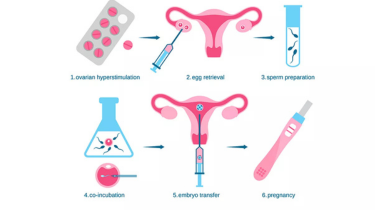
In Vitro Fertilization (IVF) is a medical process where an egg and sperm are fertilized outside the body, and the resulting embryo is transferred to the uterus to achieve pregnancy. Here’s a simplified breakdown of the entire IVF process:
Step-by-Step IVF Procedure
- Ovarian Stimulation (10–14 Days)
- You’ll receive daily hormonal injections (FSH, LH) to stimulate your ovaries to produce multiple mature eggs.
- Ultrasounds and blood tests monitor follicle growth and hormone levels.
- Trigger Shot (Ovulation Induction)
- When follicles are ready, a “trigger shot” (hCG or GnRH) is given to finalize egg maturation.
- Egg retrieval is scheduled 34–36 hours after this injection.
- Egg Retrieval (Oocyte Pick-Up)
- A minor surgical procedure under anesthesia
- A needle is guided via ultrasound into the ovaries to aspirate eggs
- Takes about 20–30 minutes, same-day discharge
✅ 4. Sperm Collection & Processing
- On the same day, the male partner provides a semen sample
- The best quality sperm are selected via a process called sperm washing
- Fertilization in the Lab
- Eggs and sperm are combined in a lab dish (IVF)
OR
- A single sperm is injected into each egg (ICSI – Intracytoplasmic Sperm Injection)
- Fertilization is monitored for 16–20 hours
- Embryo Culture (3 to 5 Days)
- Fertilized eggs are allowed to divide and grow into embryos
- The best-quality embryos are selected for transfer
- Embryo Transfer
- A thin catheter is used to place the embryo(s) into the uterus
- Painless and done without anesthesia
- Usually performed on Day 3 or Day 5 (blastocyst stage)
- Multiple or single embryo transfer may be decided based on age and quality
- Luteal Phase Support
- You’ll take progesterone supplements (oral, injectable, or vaginal) to support implantation
- Continue until pregnancy test confirmation (and often into the first trimester if successful)
- Pregnancy Test (After 12–14 Days)
- A blood test (beta-hCG) confirms pregnancy
- If positive, follow-up ultrasounds monitor fetal development
Post-IVF Procedure
After the embryo transfer, your body enters a crucial 2-week wait period. This time is vital for implantation and early pregnancy development. Here’s what happens after IVF embryo transfer and how to take care of yourself:
- Immediate Recovery (Day of Transfer)
- You’ll rest for 1–2 hours at the clinic.
- Light activity is allowed; no complete bed rest is needed.
- Mild cramping, bloating, or spotting is normal.
- Medications to Support Implantation
- Progesterone supplements (injections, vaginal gel, or tablets) continue for 10–14 days.
- Some may also be prescribed estrogen or blood thinners based on your doctor’s plan.
- Lifestyle Guidelines
- 🚫 Avoid heavy lifting, strenuous exercise, or sexual activity for 10–14 days.
- 🍲 Eat a balanced, protein-rich diet (avoid raw/smoked foods).
- 🧘♀️ Practice stress-reducing activities – light yoga, meditation, or breathing exercises.
- 💤 Ensure adequate sleep and stay hydrated.
- Symptoms to Watch For
Normal symptoms may include:
- Light cramping or abdominal pressure
- Mild spotting (implantation bleeding)
- Breast tenderness or mood swings
Contact your doctor if you notice:
- Heavy bleeding or severe pain
- Fever > 100.4°F (38°C)
- Ovarian Hyperstimulation Syndrome (OHSS) symptoms: bloating, shortness of breath, weight gain
- Pregnancy Test (After 12–14 Days)
- A blood test (beta-hCG) confirms pregnancy.
- If positive, you’ll get a follow-up ultrasound after 1–2 weeks.
- If IVF Is Successful
- Continue hormone support for up to 10–12 weeks of pregnancy.
- You’ll be transitioned to regular antenatal care.
IVF Success Rates
The success rate of IVF (In Vitro Fertilization) in India has significantly improved over the years due to advancements in medical technology, skilled embryologists, and customized treatment protocols. On average, the IVF success rate in India ranges between 55% to 70% per cycle for women under the age of 35. However, success rates gradually decline with age, with women aged 35–37 seeing around 40%–55%, those aged 38–40 achieving 30%–45%, and women over 40 experiencing lower chances at 10%–25%. Factors like the quality of eggs and sperm, embryo development, uterine receptivity, and underlying medical conditions play a key role in determining the outcome. Additional techniques such as ICSI, blastocyst transfer, preimplantation genetic testing (PGT), and frozen embryo transfer (FET) can significantly boost success rates in selected cases. Overall, with expert care and adherence to medical guidance, IVF in India remains a highly effective and affordable fertility solution with globally competitive outcomes.
FAQs from Doctors
Here are the most common questions that fertility specialists in India are asked regarding IVF (In Vitro Fertilization) — along with their expert responses:
1. How many IVF cycles are usually needed to get pregnant?
Most couples conceive within 1–3 IVF cycles. Women under 35 often succeed in the first or second attempt, while older women may need additional cycles.
2. Is IVF painful?
IVF is not painful, but may involve mild discomfort during hormone injections, egg retrieval (done under sedation), and mild cramping after embryo transfer.
3. Can I resume work after embryo transfer?
Yes. Doctors usually recommend light activity and avoiding stress, but complete bed rest is not required unless medically advised.
4. How long does one IVF cycle take?
One IVF cycle typically lasts 4 to 6 weeks from the start of ovarian stimulation to the pregnancy test.
5. What are the chances of twins or multiples with IVF?
If more than one embryo is transferred, the chances of twins or triplets increase. Many clinics now encourage single embryo transfer to reduce this risk.
6. Are there any long-term side effects of IVF?
IVF is considered safe. Most side effects are short-term, like bloating or mood swings. Long-term risks are rare and usually manageable.
7. Is IVF 100% successful?
No. IVF offers high but not guaranteed success, especially influenced by age, embryo quality, and overall health. Success may improve with multiple cycles.
8. What is the success rate of IVF in India?
For women under 35, the success rate is around 55%–70% per cycle. It reduces with age.
9. Can IVF work if I have PCOS or low sperm count?
Yes. IVF with ICSI (Intracytoplasmic Sperm Injection) helps in cases of male infertility, and IVF is commonly used for PCOS-related ovulation issues.
10. Is IVF treatment affordable in India?
Yes. IVF in India is one of the most cost-effective globally, with basic cycles starting around ₹90,000 to ₹1,50,000, depending on location and procedures.