Duration of Treatment
usually takes 3 to 4 hours.
Days of Stay
usually 5-7 days at the hospital and 15 days outside the hospital.
Anesthesia
General anesthesia.
Cost
6000 to 9000 USD
Hand and Wrist Surgery in India
India offers world-class hand and wrist surgery at a fraction of the cost compared to Western countries, with access to highly specialized orthopedic and plastic surgeons trained in microsurgery, trauma care, sports injuries, and reconstructive procedures.
Hand and wrist surgery in India is both advanced and affordable, offering treatments for conditions such as carpal tunnel syndrome, fractures, tendon injuries, arthritis, nerve damage, ganglion cysts, and deformities. The cost of these surgeries varies depending on the complexity of the procedure, the hospital, and the surgeon’s expertise. For instance, carpal tunnel release surgery typically costs between ₹45,000 to ₹90,000 INR (approx. $540 to $1,100 USD), while wrist fracture fixation may range from ₹1,00,000 to ₹1,80,000 INR ($1,200 to $2,200 USD). Tendon repairs can cost ₹80,000 to ₹1,50,000 INR, and ganglion cyst removal is relatively simpler, costing around ₹30,000 to ₹70,000 INR. More complex procedures like nerve repair or hand reconstruction microsurgery can range from ₹1,80,000 to ₹3,50,000 INR ($2,100 to $4,200 USD). These costs often include hospital stay, surgeon and anesthesia fees, OT charges, consumables, basic implants, and post-operative care. Performed by specialized hand surgeons using minimally invasive or microsurgical techniques, these procedures ensure high success rates and faster recovery. With state-of-the-art hospitals like Medanta, Apollo, Fortis, and Ganga Hospital, India has become a preferred destination for international patients seeking high-quality and cost-effective hand and wrist surgery.
Best Orthopedic Surgeon in India
- Ashok Rajgopal
- IPS Oberoi
- Pradeep Bhosale
- R. J. Devasagayam
- Ram Chidambaram
- Neelam Ramana Reddy
- H. G. Ashok
- Hemant Wakankar
- Anil Dha
- Mahesh Reddy
Top Orthopedic Surgery Hospitals in India
| |
|
|
|
· Medanta – The Medicity
|
|
|
|
· Apollo Hospitals
|
|
|
|
· Fortis Memorial Research Institute
|
|
|
|
· Kokilaben Dhirubhai Ambani Hospital
|
|
|
|
· Manipal Hospitals
|
|
|
|
· Max Super Speciality Hospital
|
|
|
|
· Aster Medcity
|
|
|
|
· Ganga Hospital
|
|
|
|
· Nanavati Max Super Speciality Hospital
|
|
|
|
· Sparsh Hospital
|
|
|
Why Choose HealthFly Medical Tourism
HealthFly Medical Tourism is the trusted choice for thousands of international patients seeking high-quality, affordable medical care in India. We partner with the country’s top hospitals and board-certified doctors to offer specialized treatments in orthopedics, cardiology, neurology, oncology, fertility, and more. What sets HealthFly apart is our end-to-end patient support—from free medical consultations, help with medical visa processing, and airport pickup, to hospital admission, surgeries, and post-operative care. Our packages are transparent and cost-effective, with no hidden charges, covering all major expenses like surgery, hospital stay, implants, medications, and physiotherapy. We ensure complete coordination with your doctors, offer multilingual support, and assign a dedicated case manager to assist you throughout your treatment journey. With a focus on safety, comfort, and successful outcomes, HealthFly is your reliable companion for accessing world-class healthcare in India.
What Is Hand and Wrist Surgery
Hand and wrist surgery refers to a group of surgical procedures used to treat conditions, injuries, and deformities affecting the bones, joints, tendons, ligaments, nerves, and soft tissues of the hand, wrist, and forearm. These surgeries are performed by orthopedic or plastic surgeons who specialize in hand and microsurgery.
This type of surgery may be needed due to fractures, arthritis, carpal tunnel syndrome, tendon or nerve injuries, ganglion cysts, congenital defects, or sports-related trauma. Depending on the condition, the surgeon may use techniques such as open surgery, arthroscopy (minimally invasive surgery), or microsurgery for delicate nerve and tendon repairs.
Common procedures include:
- Carpal Tunnel Release
- Wrist Fracture Fixation
- Tendon and Ligament Repairs
- Ganglion Cyst Removal
- Joint Fusion or Replacement (for arthritis)
- Nerve Decompression or Repair
- Hand Reconstructive Surgery (post-trauma or congenital defects)
These surgeries help relieve pain, restore hand function, improve mobility, and allow patients to return to daily activities. Recovery typically involves splinting, physiotherapy, and gradual rehabilitation, especially after complex or nerve-related procedures.
Symptoms
When Should You Consider Total Hip Replacement?
Persistent problems in the hip joint may signal the need for surgical intervention. You should consult a specialist if you notice the following signs:
-
Ongoing hip pain, swelling, or stiffness that interferes with daily activities
-
Joint damage from arthritis, including osteoarthritis or rheumatoid arthritis
-
Reduced hip strength or flexibility due to degenerative joint disease
-
Previous fractures or injuries that haven’t healed correctly
-
Detection of bone tumors in or around the hip
-
Discomfort in the hip during or after walking, exercising, or standing
-
Trouble performing routine movements like walking, climbing stairs, or getting up from a seated position
If these symptoms continue despite treatment, total hip replacement surgery could offer significant relief and improve your quality of life.
How to Prepare for Total Hip Replacement Surgery?
To ensure a safe and successful surgery, proper preparation is essential. Here are key steps involved:
-
Pre-Surgery Check-Up (PSC): Patients undergo routine tests such as blood work, ECG, ECHO (for cardiac evaluation), and urine analysis to confirm fitness for surgery.
-
Consent Form: Before the procedure, you’ll be required to sign a consent form giving the surgical team permission to proceed.
-
Medication Disclosure: Inform your doctor about any medications you’re taking, as some may need to be adjusted or stopped.
-
Hospital Admission: Patients are typically admitted on the same day as the surgery and are advised to fast for a few hours beforehand.
-
Blood Thinners: If you’re taking any blood thinning medications, they are usually discontinued at least 10 days before surgery.
-
Cost in India: The cost of Total Hip Replacement Surgery in India ranges from USD 6,000 to 9,000, depending on factors such as the patient’s condition, hospital location, and the surgeon’s experience.
What Are the Best Procedures for Total Hip Replacement?
Before recommending hip replacement surgery, your doctor will advise a thorough diagnostic evaluation, including blood tests, X-rays, CT scans, and MRI imaging. The surgical team will also explain the benefits, risks, and expectations from the surgery.
Common Surgical Techniques Used in Hip Replacement:
-
Total Hip Replacement
-
Hip Resurfacing
-
Proxima Hip Replacement
Step-by-Step Procedure:
-
Step 1 – Anesthesia:
The procedure generally takes 3 to 4 hours. General anesthesia is administered to ensure the patient feels no pain during surgery.
-
Step 2 – The Incision:
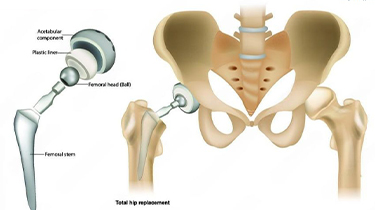
The surgeon makes a 6–8 inch incision along the side of the hip. Damaged bone and cartilage are removed, and healthy bone is preserved. The hip socket is replaced with a prosthetic cup, and the top of the femur is replaced with a metal ball and stem implant that fits into the thighbone.
-
Step 3 – Closing the Incision:
After the implant is secured, the skin is closed using sutures, adhesives, tapes, or surgical clips.
What Is the Post-Operative Care After Total Hip Replacement Surgery?
-
The medical team will provide detailed instructions on post-operative care, including wound care, medication management, and pain control.
-
Stitches or staples are usually removed 7 to 10 days after surgery.
-
Patients are typically encouraged to stand and begin walking with the help of a walker within 48 hours post-surgery. A walking stick may be used after one month.
-
Avoid sitting cross-legged or on the floor to protect the new joint.
-
Physical therapy is crucial and continues until optimal muscle strength and joint mobility are regained.
What Is the Success Rate of Total Hip Replacement?
Total Hip Replacement (THR) surgery has a very high success rate, especially when performed by experienced orthopedic surgeons. The outcomes largely depend on the patient’s overall health, the surgeon’s skill, and the quality of the implant used.
-
Implant Longevity: Most hip implants last between 15 to 20 years.
-
Recovery: Full recovery typically takes about 6 months, with most patients regaining mobility and relief from chronic pain.
-
Risk Factors: Complications are generally rare when proper pre-operative and post-operative care is followed.
What Questions Should You Ask Before Total Hip Replacement Surgery?
Here are some important questions to discuss with your orthopedic surgeon:
-
Are you a board-certified orthopedic surgeon?
-
How many years of experience do you have with hip replacements?
-
How many hip replacement surgeries do you perform each week/month?
-
Is your hospital accredited for performing these surgeries?
-
How long does a titanium hip implant typically last?
-
Am I a suitable candidate for this procedure?
-
What is the success rate of this surgery and how long is the recovery?
-
What treatment plan do you recommend and why?
-
What are the benefits and potential risks of this surgery?
-
What is the estimated cost of the entire procedure?
-
How long will I need to stay in the hospital?
-
What complications or risk factors should I be aware of?
-
When can I return to normal activities, including exercise?
-
Will I have stitches, staples, or bandages?
-
Will the surgery leave a scar or any long-term effects?
-
Might I need another surgery in the future?
-
Will I require follow-up tests or appointments?